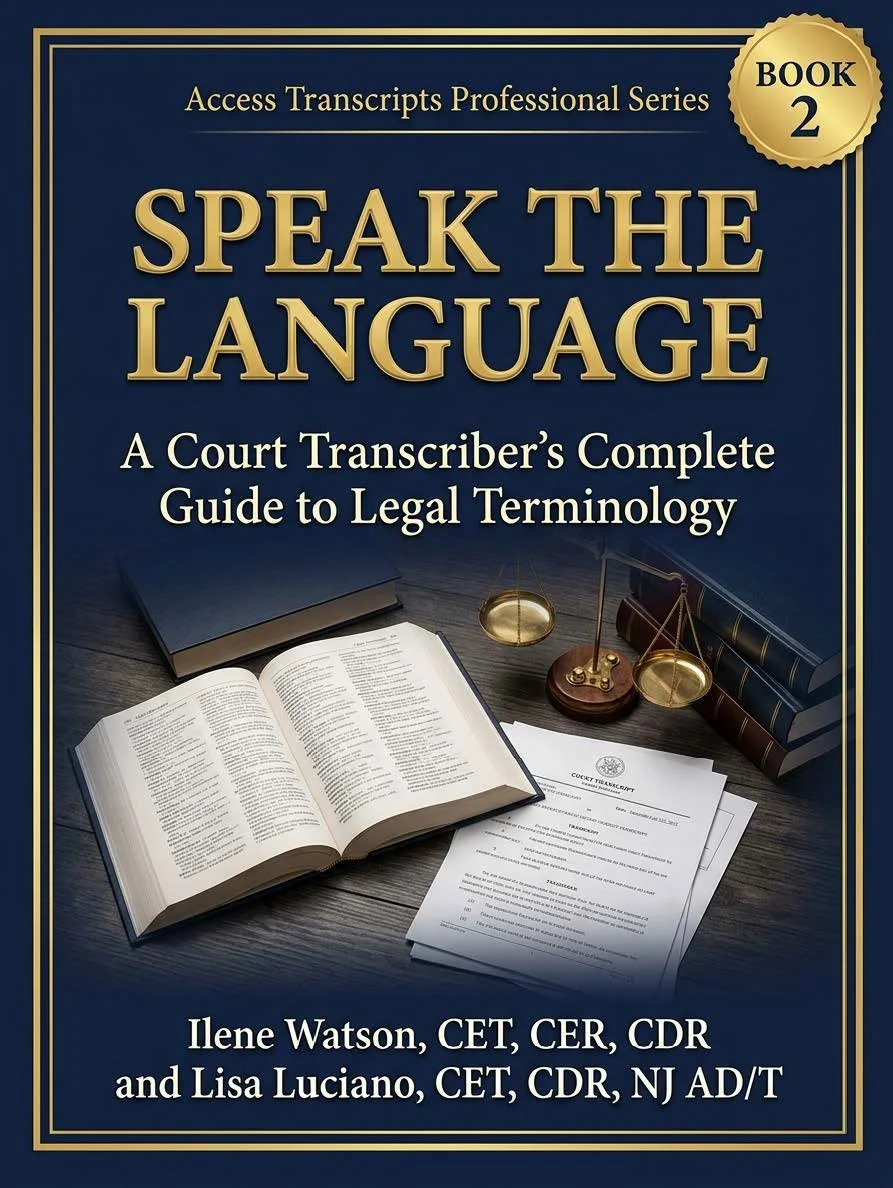
Making the leap from medical transcription to court transcription is one of the most common and most successful career moves in this industry, and for good reason. The listening skills, typing speed, and attention to detail that make someone great at medical transcription translate directly to legal work. But the vocabulary, formatting rules, and client expectations are different enough that a transition without guidance can be slower and more frustrating than it needs to be.
This guide bridges that gap. It's built specifically for transcribers who already know how to do the work and just need a map for the terrain change: how legal terminology differs from medical terminology, how courtroom and deposition formatting compares to clinical documentation, what certifications matter in this field, and how to position existing experience as an asset rather than something to explain away.
Whether the goal is a full career change or simply adding legal work to an existing transcription practice, this guide lays out a clear, realistic path forward, one built on the same standards of accuracy and professionalism that define excellent work in either field.
Delivered as a downloadable PDF that you can view on your computer or print it out and keep it at your desk as a quick reference.
Making the leap from medical transcription to court transcription is one of the most common and most successful career moves in this industry, and for good reason. The listening skills, typing speed, and attention to detail that make someone great at medical transcription translate directly to legal work. But the vocabulary, formatting rules, and client expectations are different enough that a transition without guidance can be slower and more frustrating than it needs to be.
This guide bridges that gap. It's built specifically for transcribers who already know how to do the work and just need a map for the terrain change: how legal terminology differs from medical terminology, how courtroom and deposition formatting compares to clinical documentation, what certifications matter in this field, and how to position existing experience as an asset rather than something to explain away.
Whether the goal is a full career change or simply adding legal work to an existing transcription practice, this guide lays out a clear, realistic path forward, one built on the same standards of accuracy and professionalism that define excellent work in either field.
Delivered as a downloadable PDF that you can view on your computer or print it out and keep it at your desk as a quick reference.

 Image 1 of 4
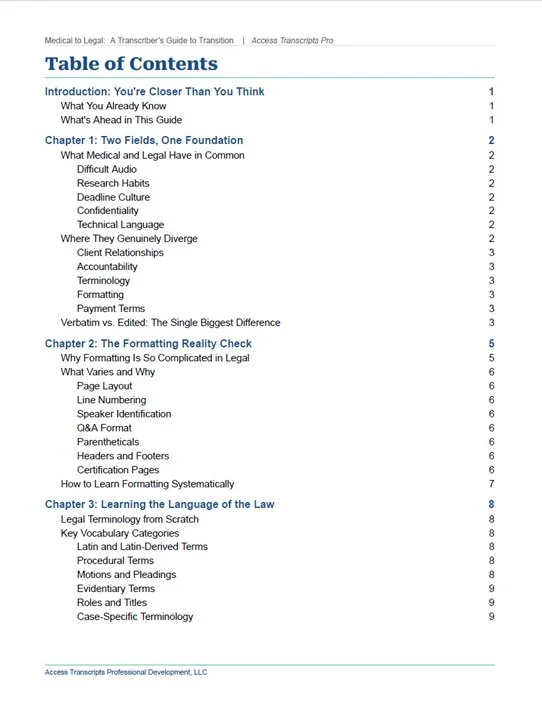 Image 2 of 4
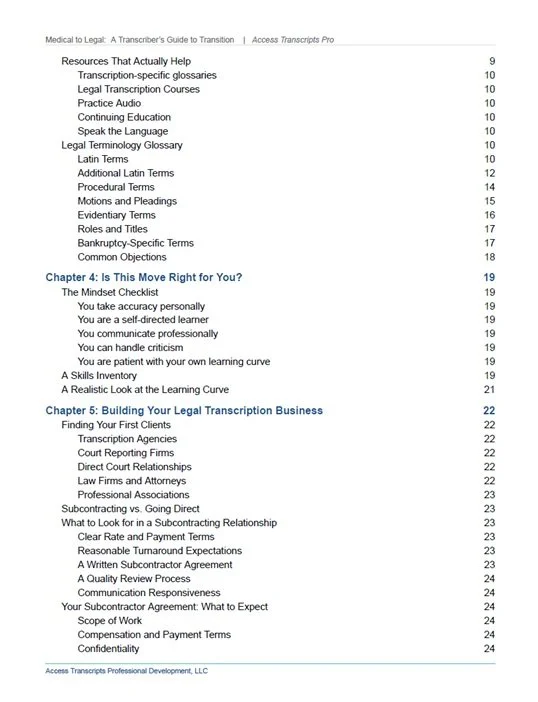 Image 3 of 4
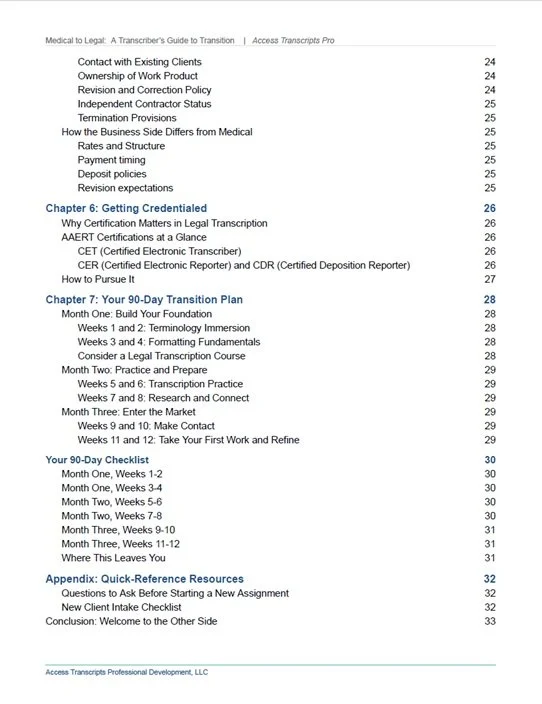 Image 4 of 4